
Digital Marketing in Uganda: One Strategy, Every Channel
Digital marketing isn’t complicated because it’s inherently hard — it’s complicated because it gets treated as a pile of disconnected tactics instead of one coordinated strategy. Fix that, and most of the confusion goes away.

Ask five Ugandan business owners what “digital marketing” means and you’ll probably get five different answers. One thinks it’s boosting a Facebook post. Another thinks it’s SEO. A third thinks it’s whatever their nephew who’s “good with computers” does on weekends. None of them are entirely wrong, and none of them have the full picture either.
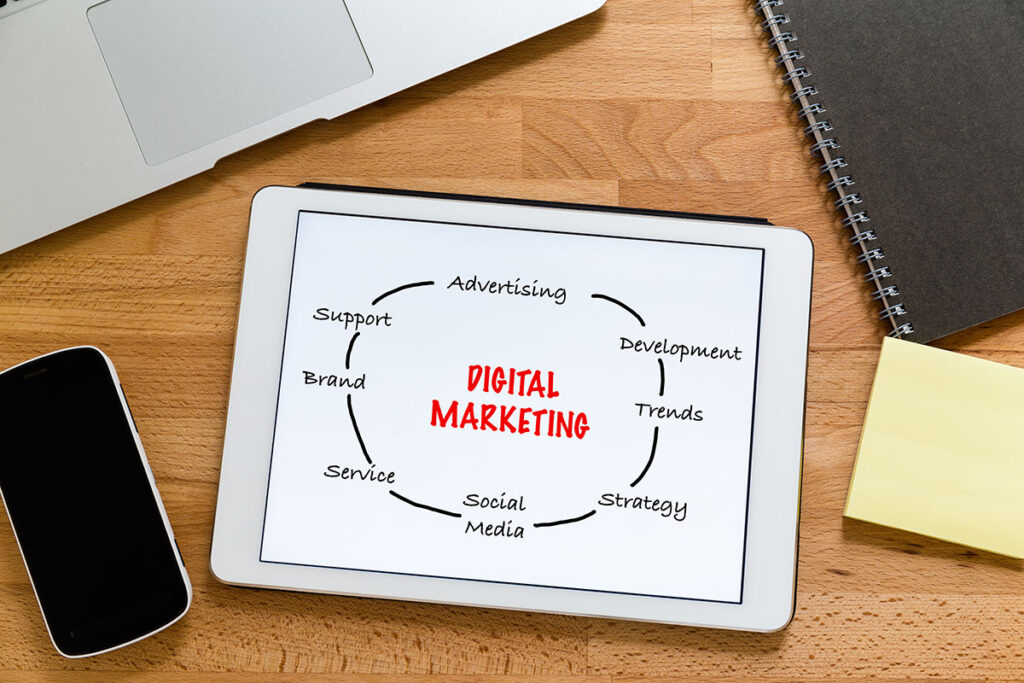
Digital marketing is really just the umbrella term for everything a business does to get found, get trusted, and get chosen online — search engines, social platforms, email, content, paid ads, all of it working toward the same goal. Done piecemeal, with one person handling Facebook and someone else fiddling with the website months later, it rarely adds up to much. Done as a connected strategy, where your SEO informs your content, your content feeds your social media, and your social media drives people back to a website built to convert them, it compounds. That’s the difference between a business that’s “doing digital marketing” and one that’s actually growing because of it.
At Website Design Uganda, digital marketing isn’t a bolt-on service we sell alongside websites. It’s a core part of what we do, built on the same foundation — because a marketing strategy that isn’t connected to the website it’s supposed to be driving traffic toward is only ever doing half the job. We handle SEO, social media, content creation, email marketing, and paid advertising, either as standalone services or, more effectively, as one coordinated strategy built around your specific business and your specific customers.
Why Digital Marketing Actually Matters Here
Uganda’s internet users have grown fast over the past several years, and most of that growth has come through smartphones rather than desktop computers. That single fact changes almost everything about how marketing has to work here. A strategy borrowed from a Western agency’s playbook, built around desktop browsing habits and unlimited data, simply doesn’t map onto a market where most people are checking a phone on a data bundle they’re watching closely.
It also means the businesses that get digital marketing right have a real edge, because plenty of their competitors still haven’t figured this out. Walk through any commercial district in Kampala and you’ll find businesses with no website, a Facebook page that hasn’t posted in months, or a WhatsApp number nobody answers promptly. That’s not a criticism — running a business is hard enough without also becoming a marketing expert. But it does mean genuine opportunity sits there for anyone willing to invest properly.
Search engines and social platforms have become the starting point for most buying decisions, even ones that end with someone walking into a physical shop or sending mobile money. Someone researches a service, checks a few options, looks at reviews or social proof, and then decides. If your business isn’t part of that research phase, you’re not in the running at all — no matter how good the actual product or service is once someone finally discovers it.
What's Actually Included in Digital Marketing
It helps to break this down into its actual parts, because “digital marketing” as a single phrase hides a lot of very different work.
Search Engine Optimisation (SEO)
Getting your website to show up when people search Google for what you offer. This is slower to build than paid advertising but keeps working long after the effort’s been put in, without an ongoing per-click cost. We cover this in depth on our dedicated SEO Services page.
Social Media Marketing
Building and managing a presence on the platforms your customers actually use — Facebook, Instagram, TikTok, WhatsApp — through content, community management, and paid campaigns. Our Social Media Marketing page goes into the specifics of what this looks like across different platforms in the Ugandan context.
Content Creation
The actual photography, video, and writing that everything else runs on. Strategy without good content to execute it with doesn’t go very far. See our Content Creation page for what this covers.
Email Marketing
A more limited but genuinely useful channel here — strongest for ecommerce transactional emails, engaged newsletter subscribers, and B2B communication. We’re upfront about where it fits and where it doesn’t on our Email Marketing page.
Paid Advertising (PPC and Social Ads)
Google Ads, Facebook and Instagram ads, and other paid placements that buy immediate visibility rather than the slower, organic route. Useful for launches, promotions, and filling the gap while SEO builds momentum in the background — though it stops delivering the moment you stop paying for it, which is worth understanding going in.
Analytics and Conversion Tracking
Making sure you actually know what’s working. Without proper tracking, marketing spend becomes a guessing game — you’re left going on gut feel about which channel is driving results, which is a bad way to spend a limited budget.
Why We Build Strategy Around Integration, Not Isolated Tactics
Here’s a pattern we see constantly: a business hires one person to run their Facebook page, a different freelancer to “do their SEO,” and treats the website as something that got built once and doesn’t need touching again. Each piece might be individually competent. None of it talks to the others. The Facebook content doesn’t reflect the keywords the SEO strategy is targeting. The website isn’t built to capture the traffic the social ads are driving to it. Everyone’s busy, nothing’s really compounding.
An integrated approach looks different. Your SEO keyword research tells you what content is actually worth creating. That content gets published on the website and also repurposed for social media. Social media drives traffic back to the site, where it’s tracked and measured. Email captures the people who showed interest but weren’t ready to buy yet, and follows up later. Every channel is pulling in the same direction instead of operating as five disconnected experiments.
This is easier to do when one team is handling the whole picture — which is exactly why we built our services this way rather than only offering isolated pieces.
Our Approach to Digital Marketing
Start With Real Numbers, Not Assumptions
Before recommending anything, we look at what’s actually happening: your current website performance, existing social presence if any, what your competitors are doing, and where your actual customers spend their time online. A strategy built on assumptions about what “should” work rarely performs as well as one built on evidence specific to your business.
Prioritise Based on Where You Actually Are
A brand-new business with no online presence needs a different starting point than an established company with a decent website but no real marketing behind it. We don’t run the same playbook for everyone — we figure out what’s actually going to move the needle for your specific situation, and start there instead of trying to do everything at once.
Build the Foundation Before Spending on Traffic
Sending paid traffic to a slow, confusing, or poorly designed website is a good way to waste a marketing budget. We make sure the destination — your website, your landing pages, your booking process — is actually built to convert before we start driving people toward it in volume.
Measure What Matters, Report Honestly
We track the metrics that actually reflect business outcomes: enquiries, sales, bookings, cost per lead — not just vanity numbers like impressions or followers that look good on a slide but don’t pay the bills. If something isn’t working, we’ll tell you, and we’ll tell you why, rather than dressing up mediocre results in flattering language.
Adjust as We Go
Digital marketing isn’t something you set once and leave running. Search algorithms shift, social platforms change what they reward, and what worked for your business six months ago might not work as well today. We review performance regularly and adjust strategy based on what’s actually happening, not on a plan written once and never revisited.
Choosing a Digital Marketing Agency in Uganda: What to Actually Look For
The market’s grown quickly, and unfortunately that includes a fair number of providers who oversell what they can deliver. A few things worth checking before you commit to anyone, us included:
- Ask for specific examples of past work in your industry, not just a generic portfolio of logos.
- Be wary of guaranteed rankings or promised follower counts — nobody can honestly guarantee search rankings, since none of us control Google’s algorithm.
- Check whether they’re transparent about pricing and reporting, or vague about what exactly you’re paying for each month.
- Ask how they measure success — if the answer is purely about likes and impressions rather than enquiries or sales, that’s worth questioning.
- Find out if the same team handles your website and your marketing, or whether you’ll be stuck coordinating between two providers who don’t talk to each other.
What Digital Marketing Actually Costs, and Why the Range Is Wide
There’s no single honest answer to “how much does digital marketing cost,” because it depends entirely on scope — how competitive your industry is, how many channels you’re running, whether you need content created from scratch, and how aggressive your growth goals are. A small local business running basic social media and light local SEO spends considerably less than an ecommerce brand running SEO, paid ads, email, and a full content programme simultaneously. We give clear, itemised quotes based on your specific goals rather than a one-size-fits-all package that doesn’t reflect what you actually need.
Common Digital Marketing Mistakes We See
- Treating marketing as a one-off project instead of an ongoing effort that needs consistent attention.
- Chasing vanity metrics — followers, likes, impressions — instead of tracking what actually converts into revenue.
- Running paid ads to a website that isn’t built to convert the traffic once it arrives.
- Trying to be active on every platform at once instead of doing two or three properly.
- No clear tracking in place, so nobody actually knows which channel is driving results and which is wasting budget.
- Copying what a competitor is doing without understanding whether it’s actually working for them either.
Digital Marketing for Different Types of Businesses
The right mix of channels depends heavily on what you’re selling and who you’re selling to.
- Ecommerce and Retail — SEO and paid ads to drive traffic, strong content and photography to convert it, and email for cart recovery and repeat purchases.
- Professional Services — content and SEO to build authority and trust, LinkedIn where relevant, and a website that clearly communicates expertise.
- Hospitality and Tourism — strong visual content, social media, and local SEO, often with a meaningful share of international search traffic.
- B2B and Industrial — LinkedIn, straightforward website content, and SEO targeting the specific terms procurement decision-makers search for.
- Local Service Businesses — local SEO and Google Business Profile optimisation above almost everything else, since “near me” searches convert fastest for this category.
The Uganda-Specific Realities That Shape Everything
A lot of digital marketing advice online just doesn’t apply cleanly here, and it’s worth naming why.
Data costs money, and people notice. A campaign that assumes unlimited scrolling on fast Wi-Fi will underperform badly against one built for someone deciding whether a video is worth the megabytes. Mobile money and WhatsApp aren’t secondary channels — for a lot of businesses, WhatsApp is where the actual sale happens, not the website or the ad itself. And trust works differently in a market where a stranger sending money before receiving a product is taking on real risk, which means credibility signals matter more here than in markets where online buying is already second nature.
None of this means the fundamentals of good marketing don’t apply — they do. It just means a strategy has to be adapted rather than copied wholesale from a template built for a different market. This is a big part of why we build marketing strategy locally, around how people here actually search, browse, and buy, instead of running a generic international playbook and hoping it translates.
How We Structure an Ongoing Engagement
Most digital marketing work isn’t a one-time project — it’s an ongoing relationship, and it’s worth being clear about what that actually looks like in practice.
We typically start with a short discovery period to understand your business, audience, and current position, followed by an initial strategy covering the first few months of work. From there, it’s a cycle: execute, measure, report, adjust. You’ll get regular updates on what’s been done and what it’s produced, in plain language rather than a dashboard full of numbers nobody’s explained to you. And because priorities shift — a slow season, a new product launch, a competitor doing something unexpected — the plan isn’t locked in stone. It flexes as your actual business needs change.
FAQs
Where should I start if I don’t currently do any digital marketing?
Usually with a solid website and local SEO foundation, since almost every other channel benefits from having somewhere good to send traffic. From there, it depends on your business — social media for consumer brands, content and SEO for service businesses. We’ll recommend a starting point based on your specific situation rather than a generic checklist.
How long before digital marketing shows results?
It varies by channel. Paid ads can show results within days. Social media engagement can build within weeks. SEO typically takes three to six months to show meaningful movement, with results continuing to compound well beyond that. We’re upfront about these different timelines rather than promising everything overnight.
Do I need to be on every social media platform?
No, and trying to be usually backfires. It’s better to do two or three platforms genuinely well than to spread yourself thin across everything and do all of it poorly.
Can you manage my digital marketing if someone else built my website?
Yes. We regularly work with businesses whose websites were built elsewhere, though if there are structural or technical issues holding back your marketing performance, we’ll flag them honestly.
What’s the difference between SEO and paid advertising, and do I need both?
SEO builds long-term, organic visibility without an ongoing per-click cost, but takes time to build. Paid advertising delivers immediate visibility but stops the moment you stop paying. Many businesses benefit from both, particularly early on, using paid ads for immediate results while SEO builds in the background.
How do I know if my current digital marketing is actually working?
Proper tracking should tell you clearly — website traffic, conversion rates, cost per lead, actual sales attributable to each channel. If you can’t answer that with real numbers right now, that’s usually the first thing worth fixing before spending more.
Can a small business afford digital marketing, or is it only for bigger companies?
Digital marketing scales to fit different budgets. A small business with a modest budget can still see genuine results by focusing on one or two channels done properly, rather than spreading a small budget too thin across everything at once.
Do you offer month-to-month arrangements, or do I need to commit to a long-term contract?
This depends on the specific service — some work, like a one-off SEO audit or a single content project, is naturally project-based, while ongoing SEO and social media management typically work best as a sustained engagement, since these channels compound over months rather than delivering results from a single burst of effort. We’ll be upfront about what commitment level actually makes sense for what you’re trying to achieve.
Web Design Services
Digital Marketing & SEO
Our Coverage
Let's Build a Strategy That Actually Fits Your Business
Get consultation and an honest assessment of where your business stands right now, and what it would actually take to grow your presence online.